If you are noticing thinning hair, the first thing you will usually hear about is medication. Many people hesitate, though. They worry about side effects, or they have heard that once you start, you can’t stop. This article explains the main side effects of hair loss medications, based on Japanese drug labels and the clinical guideline of the Japanese Dermatological Association (JDA). It then looks at what you can do without medication, and how strong the evidence is for each option.
Key points
- Medications for male pattern hair loss (finasteride and dutasteride tablets, minoxidil solution) have the strongest evidence of any option. For most people, side effects are not common.
- They can still cause side effects, including reduced sex drive and liver problems, and the tablets cannot be used by women. They also only work while you keep taking them.
- Some non-drug options are rated by the guideline, but they do not work as strongly as medication.
- It is not a choice between “medication” and “nothing.” Decide what matters most to you, and talk it through with a doctor.
What is male pattern hair loss?
Male pattern hair loss, also called androgenetic alopecia (AGA), starts after puberty and progresses slowly. An enzyme called 5-alpha reductase converts the male hormone testosterone into a stronger form, dihydrotestosterone (DHT). In hair follicles at the hairline and crown, DHT shortens the growth phase of the hair. Hair falls out before it can grow thick and long, so fine, short hairs gradually take over.
In Japanese men, it affects about 10% of men in their 20s, 20% in their 30s, 30% in their 40s, and over 40% from their 50s on.
Hair loss medications and their main side effects
Finasteride (tablet; brand name Propecia)
Finasteride blocks the type II enzyme that produces DHT. The JDA guideline gives it its highest rating (A, “strongly recommended”) for men.
- Sexual function: reduced sex drive (1% to under 5% on the Japanese label), and erectile dysfunction, ejaculation problems and lower semen volume (each under 1%). An analysis of 12 controlled trials found sexual side effects were about 1.4 times as likely as with a placebo (a pill with no active ingredient).
- Liver: liver dysfunction is listed as a serious side effect (frequency unknown). Tiredness, weakness, nausea or loss of appetite should be checked by a doctor right away.
- Other: breast tenderness or enlargement, depressed mood, dizziness and reduced sperm count (frequency unknown).
- Mood: suicidal thoughts have been reported, although a link to the drug has not been established. People with a history of depression should tell their doctor before starting.
Dutasteride (capsule; brand names Avodart and, in Japan, Zagallo)
Dutasteride blocks both the type I and type II enzymes. Japan approves it for male pattern hair loss and the JDA rates it A, but it is not approved for hair loss in every country (in the United States, for example, it is approved only for prostate enlargement). Because it acts more broadly, sexual side effects are reported more often than with finasteride.
- Sexual function: in an international trial of 557 men, erectile dysfunction 4.3%, reduced sex drive 3.9%, lower semen volume 1.3%. In a long-term Japanese trial of 120 men, the rates were 10.8%, 8.3% and 4.2% (ejaculation problems). The Japanese label also notes reports of symptoms continuing after stopping.
- Liver: liver dysfunction and jaundice (yellowing of the skin or eyes) are listed as serious side effects.
- Handling: the drug can be absorbed through the skin, so women and children should not touch a leaking capsule.
What both tablets have in common
- Women cannot take them. During pregnancy, they may affect the development of a male baby’s genitals. Finasteride tablets should not be split, and pregnant or breastfeeding women should not handle broken tablets.
- They affect a prostate cancer test. PSA, a blood marker used to screen for prostate cancer, drops to about half. Always tell your doctor you are taking one before a health check.
- Blood donation: you may be unable to donate blood while taking them and for some time after stopping. Mention it at screening.
- Under 20: safety has not been established.
Minoxidil (topical solution; brand names include Rogaine and, in Japan, RiUP)
A liquid applied to the scalp. The JDA strongly recommends it (A) at 5% for men and 1% for women, and it is sold without a prescription in many countries, including Japan.
- Scalp: itching, redness, flaking, inflamed hair follicles and rashes. In one trial of men, skin symptoms appeared in 6% with the 5% solution, 2% with the 2% solution, and 3% with placebo.
- Initial shedding: hair loss can temporarily increase in the first weeks, as hairs are replaced. Many people quit at this stage without realizing it is expected.
- Facial hair may become thicker.
- Whole body: a small amount enters the bloodstream. Stop and seek advice if you notice palpitations, dizziness, headaches, swollen hands or feet, or sudden weight gain. If you have high or low blood pressure, or heart or kidney disease, check with a doctor or pharmacist first.
Oral minoxidil is a different matter
Minoxidil tablets are sometimes prescribed off-label for hair loss in some countries. They are not approved in Japan for any use, and the JDA guideline gives them its lowest rating (D, “should not be done”). Besides thicker hair all over the body, reported side effects include chest pain, a faster heart rate, palpitations, shortness of breath, swelling, weight gain and heart failure.
Other things to know before you start
- The effect stops when you stop. To keep the results, you keep taking the medication, and keep watching for side effects.
- It takes about six months to judge whether it is working.
- Cost: in Japan, hair loss treatment is not covered by public health insurance, so you pay the full cost for as long as you continue.
On the other hand, side effects of finasteride were uncommon in Japanese trials, and some people taking a placebo also reported reduced sex drive. Rather than fearing side effects more than necessary, the realistic approach is to check with a doctor what could happen and what you are willing to accept.
Non-drug ways to care for thinning hair
First, make sure it really is pattern hair loss
Not all thinning is male or female pattern hair loss. The JDA guideline lists other causes to rule out:
- A type of alopecia areata (autoimmune hair loss), including forms that thin the whole scalp slowly
- Hair loss linked to illnesses such as thyroid disease or collagen diseases
- Anemia or rapid dieting
- Hormone treatment or other medications
These need a different approach. Seeing a dermatologist to confirm the cause can save you time before you decide on medication.
Look after your daily habits
Hair is made of protein, and minerals such as iron and zinc are essential. Extreme dieting can itself cause hair loss, so a balanced diet is the foundation.
Smoking is worth reconsidering. A study of men in Taiwan found an association between smoking 20 or more cigarettes a day and moderate-to-severe pattern hair loss.
Healthy habits will not stop pattern hair loss on their own. Think of them as the base that supports everything else.
Wash your scalp gently
Shampoo about once a day, use your fingertips rather than your nails, and take time to rinse thoroughly. Dry your hair soon after washing. Over-washing and rough scrubbing put strain on the scalp.
Scalp massage
In a small Japanese study, nine men massaged their scalp for four minutes a day for 24 weeks, and their hair became thicker. The study was very small, and the number of hairs did not increase. Treat massage as an easy, low-risk habit rather than a treatment.
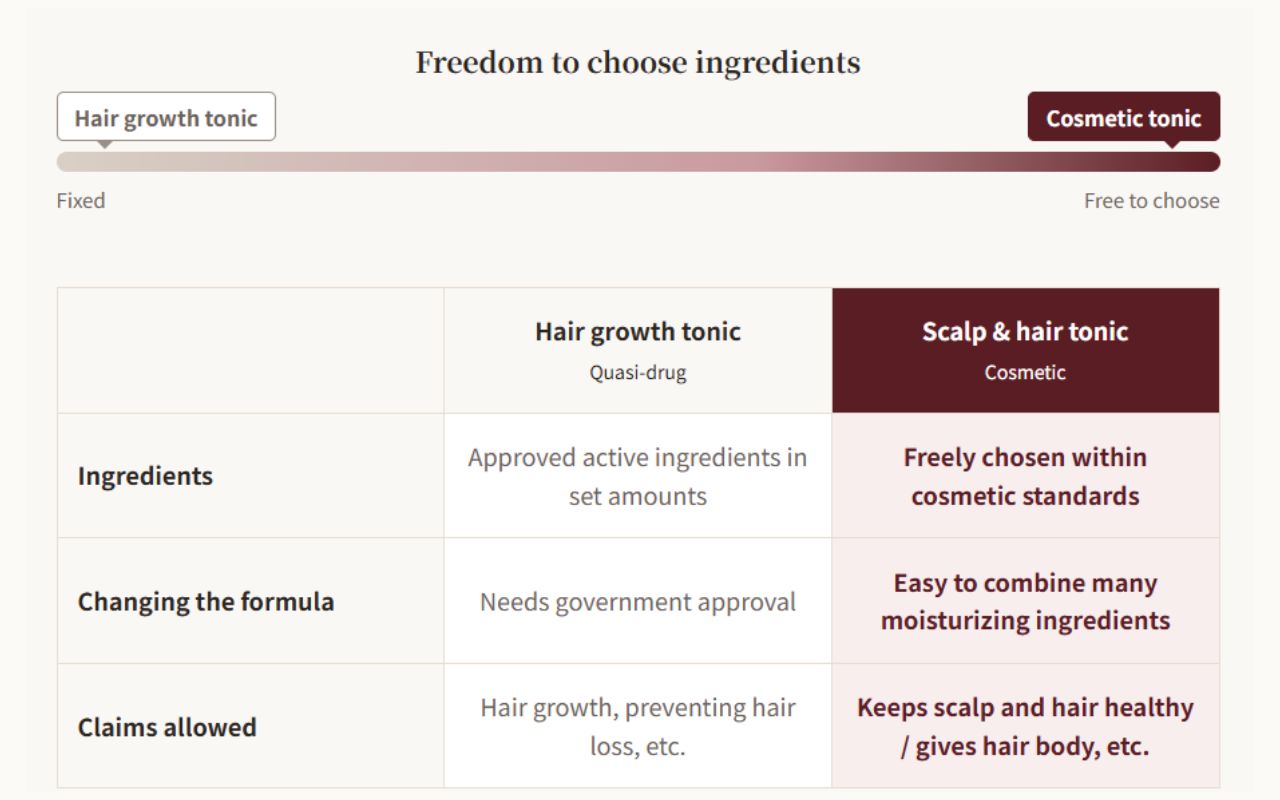
Choose a quasi-drug hair tonic
In Japan, products are classed as drugs, “quasi-drugs” (iyaku-bugaihin) or cosmetics. A quasi-drug has a milder action than a drug, and contains active ingredients approved by the government. You can spot them in Japanese drugstores by the words 医薬部外品 on the label. Some common hair tonic ingredients have been rated by the JDA guideline:
- Adenosine: recommended for men (B); may be used by women (C1)
- t-Flavanone: may be used (C1)
- Cytopurine, pentadecane: may be used (C1)
The guideline considers their side effects mild. When choosing a product, check the ingredient list for these names. Stop using it if your scalp becomes itchy or red.
Use a cosmetic scalp tonic
Some scalp lotions and essences are classed as cosmetics rather than quasi-drugs. As cosmetics, they cannot claim to grow hair or prevent hair loss. Their role is to moisturize the scalp and keep it healthy.
Cosmetic scalp tonics do have their own advantages:
- More freedom in ingredients: a quasi-drug must use government-approved active ingredients within set amounts. A cosmetic only has to follow rules such as banned ingredients, so the maker is relatively free to decide what to include and how much. That makes it easier to combine many moisturizing and skin-conditioning ingredients designed around scalp condition.
- Help with dryness: like the skin on your face, a dry scalp is more prone to itching and flaking. Keeping it moisturized is part of everyday care for a healthy scalp environment.
- Full ingredient lists: in Japan, cosmetics must list every ingredient, so you can check before buying and avoid anything that has irritated your skin before. Our guide to reading Japanese scalp care labels explains how.
Quasi-drug tonics and cosmetic tonics are not either-or. Many people use a moisturizing cosmetic tonic alongside a quasi-drug one.
If you are unsure about medication
Pattern hair loss is progressive, and non-drug care alone is unlikely to stop it. With that in mind:
- If side effects are your main worry, ask a doctor about options other than tablets, such as using only topical minoxidil, combined with a quasi-drug or cosmetic scalp tonic.
- If you are planning a family, or your partner may become pregnant, go through the precautions for the tablets with a doctor in detail.
- If your thinning is mild or the cause is unclear, see a dermatologist first, then start with daily habits, scalp care and a hair tonic.
Whichever path you choose, keeping your scalp clean and avoiding unnecessary strain supports everything else.
When to see a doctor
- Hair loss has increased suddenly
- Hair is falling out in round or patchy areas
- Your scalp is very itchy, red or painful
- You notice changes in your health or mood while taking a hair loss medication
—
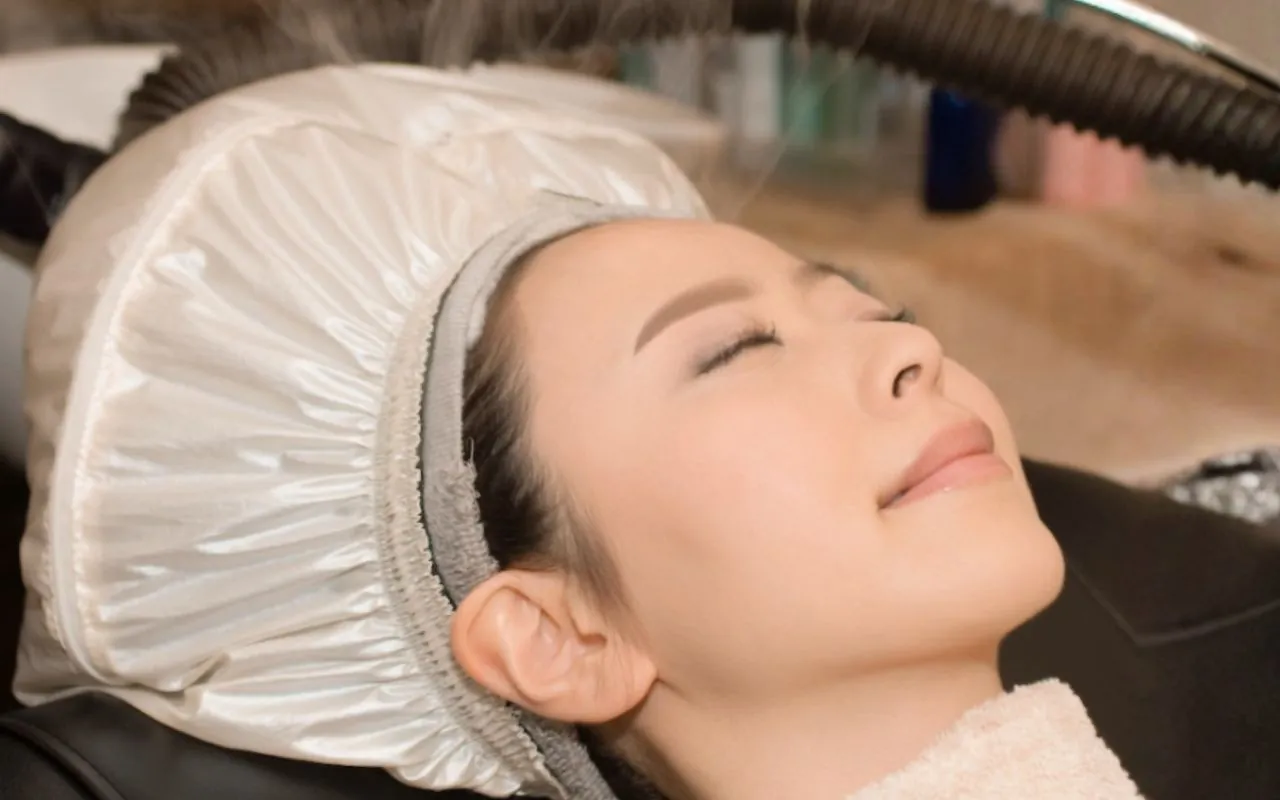
At Belle Cheveu, a head spa specialist in Tokyo, each visit begins with a consultation and a microscope check of your scalp, and the care is adjusted to its condition that day. A head spa is not a medical treatment. But if you want to rethink your everyday scalp care without medication, or keep your scalp clean and comfortable alongside treatment, it is one option to consider during your stay in Tokyo.
Experience an Authentic Japanese Head Spa in Tokyo
Belle Cheveu has specialized in Japanese head spa treatments since 2006, with four directly managed salons in Tokyo.